Thursday, February 25, 2016

Animated Feature Film

I'm at the point where I'm finishing movies the day I write their articles. As soon as I finish this, I'm off to watch The Look of Silence and hopefully get documentary written up tonight. There is the barest of chances I might yet get to Foreign Film, but I'm very strongly thinking of watching Concussion, Chi-Raq, and Beasts of No Nation to write about snubs and, particularly, to throw my, admittedly white, voice in on #OscarsSoWhite. Only time will tell.

Animated Feature Film:
  • Anomalisa
  • O Menino e o Mundo (Boy & the World)
  • Inside Out
  • Shaun the Sheep Movie
  • When Marnie Was There


I am continually amazed at how far stop-motion animation has come, particularly with Laika and their run of films (Coraline, ParaNorman, The Boxtrolls). Instead of Laika's whimsy, Anomalisa occupies an uncanny valley of set design that is so almost real it's disturbing as it makes a very adult-focused animated film. Where Charlie Kaufman previously let us all be John Malkovich, he inverts this gaze and instead of the multitudes occupying one man, one person now occupies the multitudes. I had originally thought Kaufman was trying to write a film on face-blindness and his idea of how difficult that may make human interaction when no one is distinguishable from anyone else. Instead, though, it becomes incredibly clear that this is a fantastically produced take on the Fregoli delusion wherein everyone else is just an iteration on the same person. Kaufman has written several fantastic screenplays, but Anomalisa doesn't hold a candle to his previous work. It goes so far as to bludgeon you with its theme, explicitly telling you exactly what it is about. Originally conceived as a stage production, I have to think that it simply doesn't translate to film. 
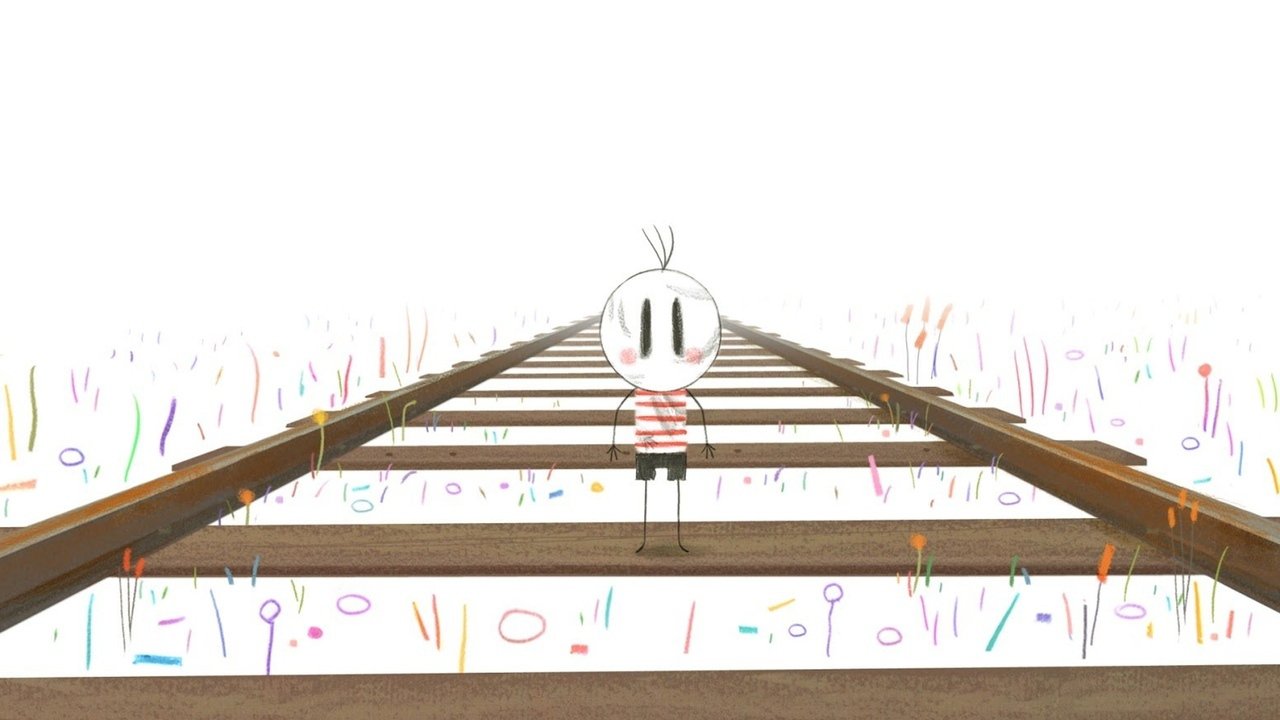


Gorgeously animated, Boy & the World looks as though someone took The Very Hungry Caterpillar's art style and reimagined it in paint, crayon, and collage and then animated it. Set to an alternatingly despairing, terrifying, and effulgent soundtrack, Boy & the World explores the imposition upon Brazilian culture and destruction of her people by imperialistic Western industrialism as seen through the eyes of an orphan trying to find his father. By using printed collage for modern goods and advertisements, AlĂȘ Abreu directly equates them with bland overproduction and reimagines them later as collage trash. This garbage litters the countryside literally turning the nation into a landfill to which the local workforce is displaced when their textile factory is mechanized. A proud, colorful, joyous populace is distilled through the eyes of a child, and by the end of Boy & the World, it and he are reduced to drab colors living out their lives and fighting amongst each other for survival in the waste byproduct of their colonizers. As though the allegory may be too dense*, toward the end of the film, Abreu literally burns the animation to show a countryside in flames and workforce ravaged by industrialism. As much a call out as Seuss' The Lorax, Boy & the World entrusts the hope for preserving the previous generations' achievements and culture into the hands of Brazil's children.


There are a million and one articles praising Inside OutBoston.com considers it for "Pixar's best movie" while The Telegraph calls it "the best children's film." And then there's Amy Poehler calling it "the best movie ever made." After watching it, I certainly can't fault them for gushing over it. It is, however, likely an incredibly Amerocentric view, but perhaps they just never saw a single Studio Ghibli film. The best things about Inside Out are definitely all to do with the screenplay, so, seriously, go read that. The animation was typical Pixar - gorgeous, fluid, and wonderfully expressive. That's a thing, though: it was typical Pixar and thus doesn't terribly stand above the shoulders of those giants. Wonderfully conceived and realized, Inside Out will definitely be on most best animated films of all time lists from this point forward, but I'm reticent to catapult it to the top.


I positively adored Chicken Run when it came out as well as The Pirates! Band of Misfits when I got to watch it for this project (even though I ultimately didn't write that year), so you can imagine how excited I was for another Aardman production. Shaun the Sheep Movie, though, while being adorably animated claymation, comes off as rather tedious. Even more than Boy & the World, dialogue is non-existent here, but the visual story is hardly engaging enough to make up for it. I suspect it functions well as a children's movie, but it is a little too clunky for most adults who might have to sit through it.


In 2013, Hayao Miyazaki gave us Kaze Tachinu (The Wind Rises), and Isao Takahata, the collaborator with whom he founded Studio Ghibli, gave us Kaguya-hime no Monogatari (The Tale of Princess Kaguya). Despite being two of the most visually stunning films in recent history, animated or not, and dripping with storytelling, neither won an Academy Award having lost to Frozen and Big Hero 6, respectfully. That year, with those two films, both directors stepped back from creation, handing off the reigns of the studio they founded. Miyazaki has been coined time and again "the Walt Disney of Japan," which is probably doing him a disservice, but it would follow to liken Studio Ghibli to Walt Disney Studios. With new creators at the helm, When Marnie Was There is set to answer the question of how the studio will fare without the old heads overseeing production. Maybe it will grow on me, but this is without reservation my least favorite Ghibli film. Admittedly, my exposure has been biased by popularity for most of their production run, but this is absolutely no Princess Mononoke. It's not even Ponyo. As per usual, the non-character animation is richer and more nuanced than nearly anything else in existence which only makes sense seeing as director Hiromasa Yonebayashi has been animating at Ghibli since 1997's Princess Mononoke. Even still, the animation feels restrained, as though Yonebayashi is fearful of stepping out and making a mistake with his first project. This conservativism extends throughout the film as the direction comes off as a little subpar, the acting as mediocre, and the script as bland and uninteresting. When Marnie Was There, however is still a Studio Ghibli production, so it's almost worth a watch just for that. It is clear, though, that Miyazaki and Takahata have left shoes that may be too big to ever fill. Hopefully, these growing pains will pass quickly so that it will at least no longer feel like a child clomping around in their mother's heels.


I legit cried writing this article while I was thinking about Boy & the World's animation. It is so stunningly gorgeous. They say a picture is with a thousand words, and this moving tapestry is millions upon millions of words that more than make up for the minimal dialogue. Without a single reservation, it is my favorite of these films. Having witnessed one stunning foreign language animated film after another lose to the yearly production of American animation powerhouses, though, I also don't have a single reservation suggesting that Inside Out is going to win this one.

Should win: O Menino e o Mundo (Boy & the World)
Will win: Inside Out


* I know I just ripped Kaufman for such direct exposition, but the theme of Anomalisa was more obvious and less in need of such explicitness. Also, it is a film for adults who, theoretically, should be able to deconstruct themes with greater ease.

Wednesday, February 24, 2016

Lead Actress

One of my favorite things to do is to read bad reviews for great things. Sometimes it's one-star Yelp reviews for three-star Michelin restaurants. A lot of times it's bad amazon reviews thanks to twitter.

The takeaway is that, while I'm really critical about a lot of films, I am also very ignorant about a lot of their components. A lot of elements go right over my head, and I wonder who out there is reading my reviews like I read this take on Kung Fu Panda.

Tuesday, February 23, 2016

Lead Actor

Time to answer the question that's on everyone's mind: is this Leo's year?

Actor in a Leading Role:
  • Bryan Cranston in Trumbo
  • Matt Damon in The Martian
  • Leonardo DiCaprio in The Revenant
  • Michael Fassbender in Steve Jobs
  • Eddie Redmayne in The Danish Girl

Monday, February 22, 2016

Supporting Actress

Two in one day? Get used to it! We're on the film train with less than six days until the Oscars air.

Actress in a Supporting Role:

  • Jennifer Jason Leigh in The Hateful Eight
  • Roony Mara in Carol
  • Rachel McAdams in Spotlight
  • Alicia Vikander in The Danish Girl
  • Kate Winslet in Steve Jobs

Supporting Actor

I'm hitting the point that I do every year in my Oscar blogging that I just kinda start breaking down. My feeling was that is usually comes in around 10,000 words and 15 articles. I checked, and sure enough I'm at 12,222 words and 16 articles so far this year. Plus 27 feature films and 17 short films. This last week is always the hardest, and I'm a couple days behind. As such, my favorite category foreign film might get left out this year so that I can finish out the rest. We'll see.

Saturday, February 20, 2016

Original Screenplay

Finally, a category I get to be a hater on!

Writing (Original Screenplay):

  • Matt Charman, Ethan Coen, and Joel Coen for Bridge of Spies
  • Alex Garland for Ex Machina
  • Pete Docter, Meg LeFauve, Josh Cooley, and Ronnie del Carmen for Inside Out
  • Josh Singer and Tim McCarthy for Spotlight
  • Jonathan Herman, Andrea Berloff, S. Leigh Savidge, and Alan Wenkus for Straight Outta Compton


Bridge of Spies was a plodding, boorish film which is about as far from a spy movie as one might expect. There are witticisms throughout as is typical Coen brothers fare, but the matchup with Steven Spielberg didn't help anyone. One has to assume there is something there with the Coen brother's history of nominations and wins in the writing categories, but it's sunk in so much murky water, it just feels like mud.


I refuse to dignify with consideration for a writing award a fiction whose plot I gathered in the first twelve minutes. Two years ago when Her won, it was for a novel portrayal of artificial intelligence and a deeply realized near-future. Ex Machina, though, would have been derivative garbage two decades ago. 


How many major films do you know that feature mental health? No. Stop. Mental health. Not characters with mental disorders. Not mental illnesses. Mental health. Inside Out is that movie as it lives mostly inside the head of Riley from birth right up to adolescence. The deftness with which the writers navigate around their perceptions of how the mind works is fascinating. Employing five emotions (Anger, Disgust, Fear, Joy, and Sadness), those writers create a cooperative of characters all invested in their healthy adult. Most importantly, perhaps, doesn't stand to denigrate any of the emotions as being inherently unhealthy. They are all necessary in their right circumstances and deleterious in the wrong ones. In the culture that I see around me, too often all of those emotions other than joy are disparaged, perhaps especially sadness. Sadness is a thing to be avoided, and so, too, early in the film, she is shooed and restricted from being an inherent and functional part of her human's emotional ecosystem. Through the course of the film we realize just how necessary it is to let our sadness exist, and that sometimes we must let it have control. The thoroughness with which Inside Out is realized is its own joy to experience as old memories fade and are discarded, core memories help define us, and numerous other insightfully inventive touches. Inside Out features most strongly two emotions, joy and sadness, and it's no coincidence that those two reverberate most with its audience. If anything, bittersweet is a feeling that Inside Out teaches is at least as necessary as all the others.


Spotlight's ability to portray an ensemble cast and still give the film an emotional arc is what lands it here. There is a lot of geographic and tonal setting early in the film with references to The Curse of the Bambino, Catholic families, and relation to the New York Times. There's some rich double-speaking between the new Globe editor and a Cardinal who used to edit a small Mississippi paper. The Cardinal likened Boston to that Mississippi town where he felt like a "meddling outsider" for taking a stance on civil rights but that the right thing must be done, a situation similar to that the man across from the cardinal now finds himself in. Spotlight's success lies in tying so many threads together uniformly while maintaining a brisk pace without sacrificing coherency.


Straight Out of Compton admirably took the muddled politics of a decade of hip-hop and created a fluid, dynamic script. The breadth of people and stories to cover is massive, and knowing what to use and what to pass on is a gargantuan responsibility. The writers artfully wove the menagerie of characters together, keeping them all in mind while differentiating them solidly. I can't begin to speak for the authenticity, but the distillation of so much material into a concise and enjoyable script puts Compton on the map.


I will feel every emotion except joy if Inside Out does not win. It is the ninth animated feature to be nominated for a writing award, all but one of which coming from Pixar and none of which have gone on to win. I really, really hope its time has come, but I have serious doubts that it will be taken seriously. Who, then? Is it the white crew behind Straight Outta Compton? Is it the perpetually nominated Coen Brothers? Or is it the Spotlight team? Your guess is as good as mine.

Should win: Pete Docter, Meg LeFauve, Josh Cooley, and Ronnie del Carmen for Inside Out
Will win: Josh Singer and Tim McCarthy for Spotlight

Friday, February 19, 2016

Adapted Screenplay

I'm late. Let's get to this.

Writing (Adapted Screenplay):
  • Charles Randolph and Adam McKay for The Big Short
  • Nick Hornby for Brooklyn
  • Phyllis Nagy for Carol
  • Drew Goddard for The Martian
  • Emma Donoghue for Room